
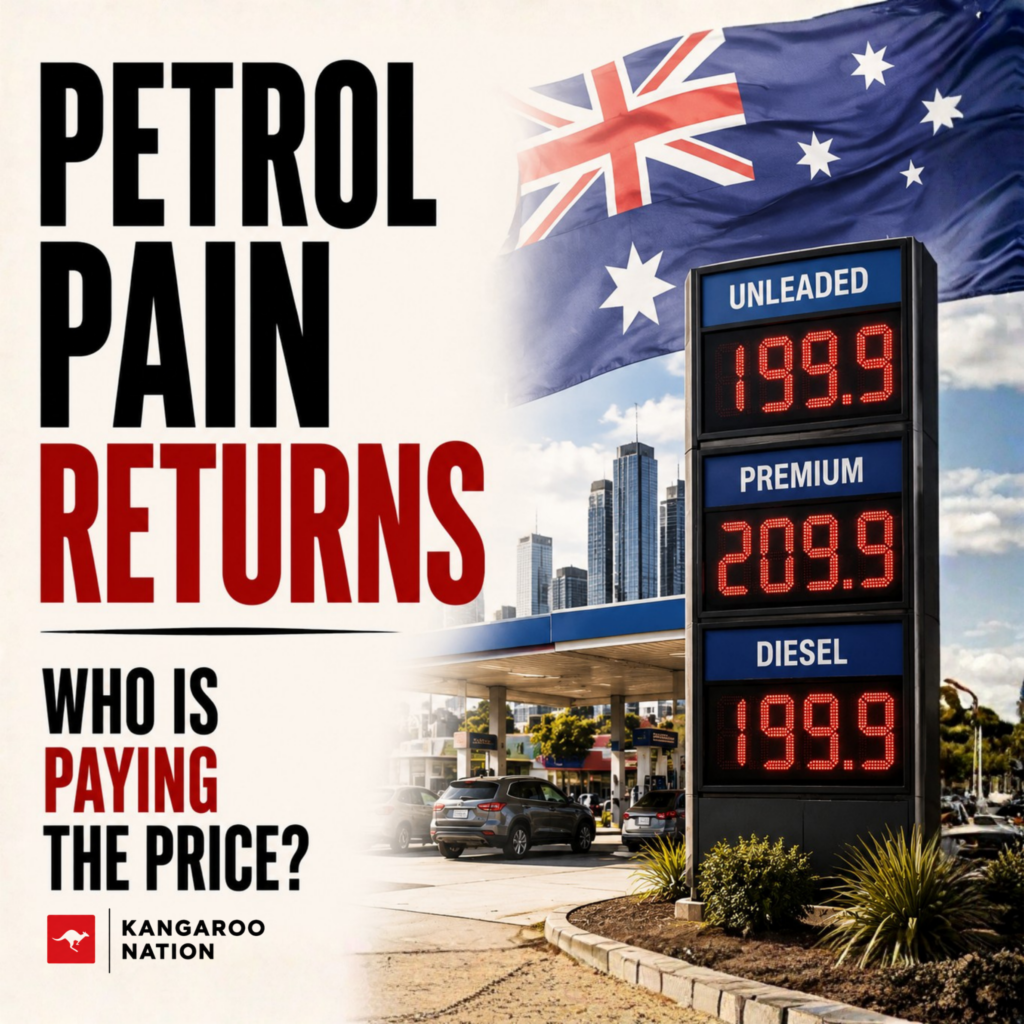
Australia’s temporary fuel-excise discount ends at midnight on Sunday, setting up higher wholesale costs from Monday and renewed pressure on household budgets, regional communities and businesses that depend heavily on transport.
The federal government’s July relief reduced the excise rate on petrol and diesel from 52.6 cents to 36.6 cents a litre. From 3 August, the tax returns to its pre-conflict rate after the scheduled indexation date.
How much could prices rise?
The remaining discount is 16 cents a litre. Once the associated GST is included, the Australian Competition and Consumer Commission has estimated that the effect on petrol and diesel prices may be up to 17.6 cents a litre.
That would add as much as $8.80 to a 50-litre fill or about $11.44 to a 65-litre tank if the full increase reaches motorists. The change may not appear at every service station at the same time because retailers turn over fuel stocks at different rates and local competition and petrol-price cycles also affect what drivers see on the sign.
International refined-fuel prices and the Australian dollar remain major influences. A station’s price can therefore move by more or less than the tax change, and a sudden increase cannot automatically be attributed entirely to excise.
Why the relief is ending
The government introduced the temporary reduction after the Middle East conflict disrupted energy markets and pushed up fuel costs. The original relief was larger, before being reduced to 16 cents a litre for July and extended until 2 August.
Treasurer Jim Chalmers has said the measure was designed as temporary help rather than a permanent tax change. The government also aligned its expiry with the regular August excise-indexation date to avoid forcing fuel businesses to manage several different tax rates in a short period.
Who feels the cost first?
Private motorists will see the most direct effect, particularly people who must drive long distances to work and families without reliable public-transport alternatives. The burden is likely to be more noticeable in outer suburbs and regional Australia, where trips are longer and fuel is often already more expensive.
Lower-income households are especially exposed because transport takes a larger share of their weekly budget. For a family filling two vehicles, even a modest increase can compete with spending on groceries, rent, power and medical costs.
The heavy-vehicle Road User Charge discount also ends. Freight operators may face higher cash costs at the pump, although eligible businesses can claim fuel-tax credits under existing rules. Where transport expenses rise, some businesses may eventually pass part of the cost into delivery charges and the price of goods. That process is neither automatic nor identical across industries.
Will service stations profit from the change?
The ACCC has warned fuel companies not to use tax changes as cover for excessive price increases. It expects retailers to be transparent and able to support claims about why prices have moved.
Wholesale tax changes generally flow through as stations replenish their tanks. The regulator’s monitoring after the partial restoration on 1 July showed that prices did move higher, but the timing varied. Drivers should compare nearby stations rather than assuming every retailer has increased prices by the same amount.
What motorists can do
State fuel-price websites and independent comparison apps can expose large differences within the same suburb. Drivers can also watch local price cycles, combine trips and avoid panic-buying, which can create queues without changing the underlying supply.
For governments, the larger question is how to reduce Australia’s exposure to global oil shocks. Stronger fuel security, efficient freight, better public transport and a gradual shift to lower-cost electric transport all form part of the long-term answer. Temporary tax relief can soften a crisis, but it does not remove the country’s dependence on imported fuel and international prices.
Watch: how the fuel-excise relief worked
Sources: Australian Government fuel-relief fact sheet · Australian Competition and Consumer Commission · ABC News · ABC News video



Leave a Reply