
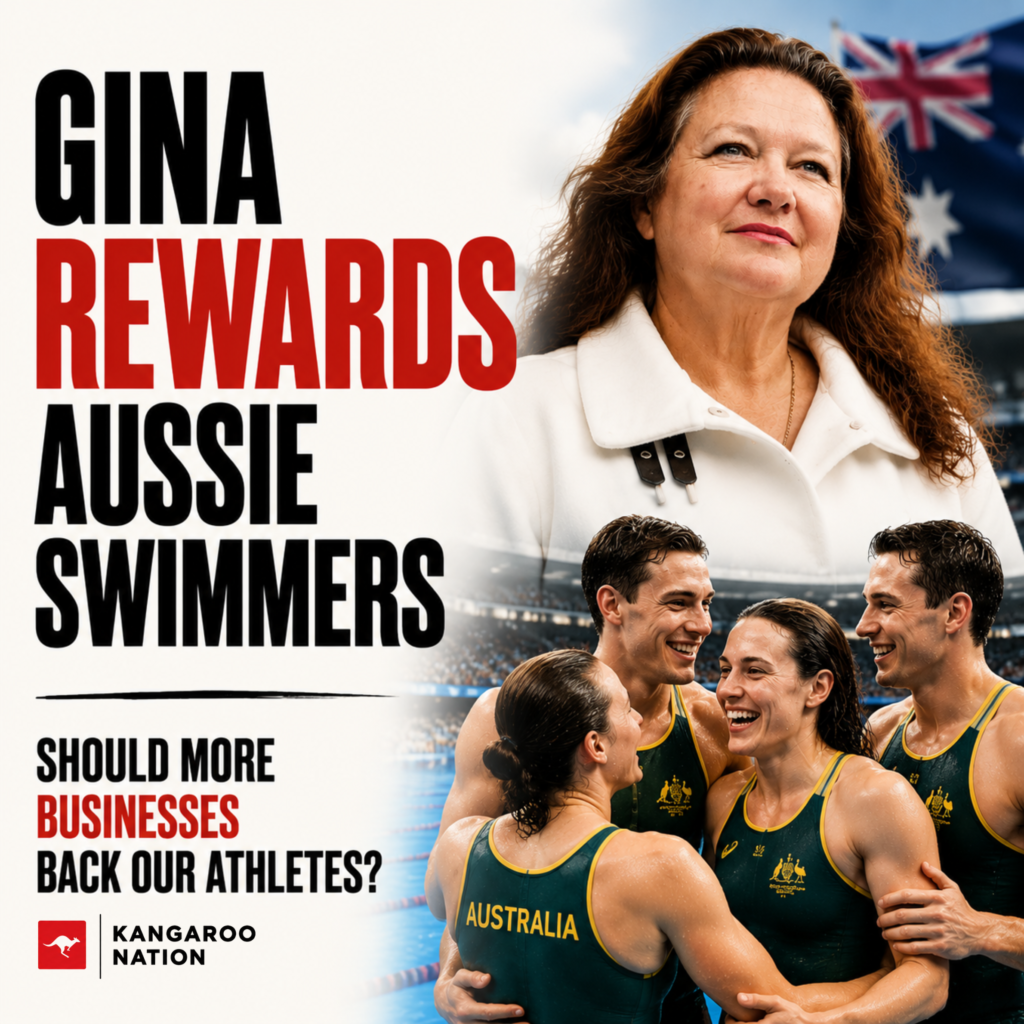
Australian swimmers at the Glasgow 2026 Commonwealth Games have been offered substantial privately funded bonuses, reopening a broader debate about how elite athletes should be supported and whether more Australian businesses should contribute.
Under a scheme announced through Hancock Prospecting, swimmers can receive $30,000 for a world record, $20,000 for an individual gold medal, $15,000 for silver and $10,000 for bronze. An athlete who wins individual gold in world-record time could receive $50,000.
The money comes from mining magnate Gina Rinehart, a long-time patron of Australian swimming. It sits outside the official Commonwealth Games prize structure and government athlete-support programs.
A reward for years of work
Elite swimming demands years of training, travel, coaching, medical care and sacrifice. Many athletes train at a professional level without receiving income comparable to athletes in major commercial sports. Careers can be brief, and the financial return is uncertain even for competitors who represent Australia internationally.
Rinehart said the bonuses were intended as a thank-you to athletes who bring pride to the country. Swimming organisations said her backing extends beyond one event and includes direct athlete support, development programs and support for swimming, artistic swimming and rowing.
Swimming Queensland calculated that, if the same scale of bonuses had applied to Australia’s Birmingham 2022 results, Dolphins swimmers would collectively have earned more than $1 million.
Why the thank-you controversy arose
Reports said Australian team members were instructed not to mention Rinehart or other private benefactors during Games interviews and social-media activity. That prompted claims that swimmers had been “banned” from thanking her.
The restriction is better understood as a general sponsorship rule. Major sporting events protect official commercial partners by limiting athletes’ promotion of non-official sponsors during the competition period. Commonwealth Games Australia said the rule was not directed only at Rinehart.
The distinction matters. Athletes can appreciate private support while still complying with team agreements. After the Games period, they are generally freer to acknowledge individual benefactors.
Should more businesses support athletes?
There is a strong argument that private support can fill gaps. Government funding must cover many sports, pathways and community priorities. Businesses can provide direct assistance, performance bonuses, equipment, travel and post-sport career opportunities.
But private money naturally flows toward successful and visible athletes. Swimming, rowing and Olympic medal prospects attract attention; less prominent sports, para-athletes and competitors early in their development may struggle to find sponsors.
A healthier model would combine public investment with transparent private backing. Government can protect broad access and development pathways, while sponsors provide additional resources without controlling selection, coaching or public statements.
The benefits of private backing
- Direct financial relief: athletes can reduce outside work and concentrate on training and recovery.
- Performance incentives: bonuses recognise exceptional results without permanently increasing public spending.
- Long-term partnerships: businesses can support coaching, sports science and junior development.
- Career opportunities: sponsors can help athletes build skills and employment plans beyond competition.
The risks that require safeguards
Sponsorship is not charity without conditions. Companies receive reputation, access and association with national success. Sporting bodies should disclose significant agreements, protect athlete choice and prevent financial influence from overriding performance standards or independent governance.
Athletes should not be pressured into political endorsements or personal loyalty. Selection decisions must remain with qualified sporting organisations. Complaints and conflicts of interest should be managed through published rules.
There is also a tax-policy question. If private support receives concessions, the public is entitled to know how the benefits are distributed and whether grassroots participation is strengthened alongside elite performance.
A wider funding challenge
Australia expects international success across swimming, athletics, rowing, cycling, team sports and the Paralympic program. Those expectations are expensive. Facilities, coaching, travel and sports science require stable funding between major events, not only after a medal is won.
Businesses considering athlete support could pool money into independently administered funds, back emerging athletes through scholarships or match government grants. Regional companies could support local pathways instead of competing only for famous names.
The best system would not force a choice between taxpayers and business. It would set clear public priorities, encourage responsible private investment and ensure athletes are not left financially insecure while carrying national expectations.
The verdict
Rinehart’s bonuses are significant and will be welcomed by swimmers who reach the podium. They also expose a reality: sporting glory is public, but the financial burden is often private.
More Australian businesses should consider backing athletes, especially when support is long-term, transparent and spread beyond established stars. Private money cannot replace a fair national sports system, but it can strengthen one.
Sources
- Reuters via Gina Rinehart — Commonwealth Games swimming bonuses
- Swimming Queensland — Bonus amounts and athlete support
- The Guardian — Sponsorship restrictions during the Games
- The New Daily — Australian swimmers and the bonus scheme
- Australian Sports Commission — Direct Athlete Support



Leave a Reply