
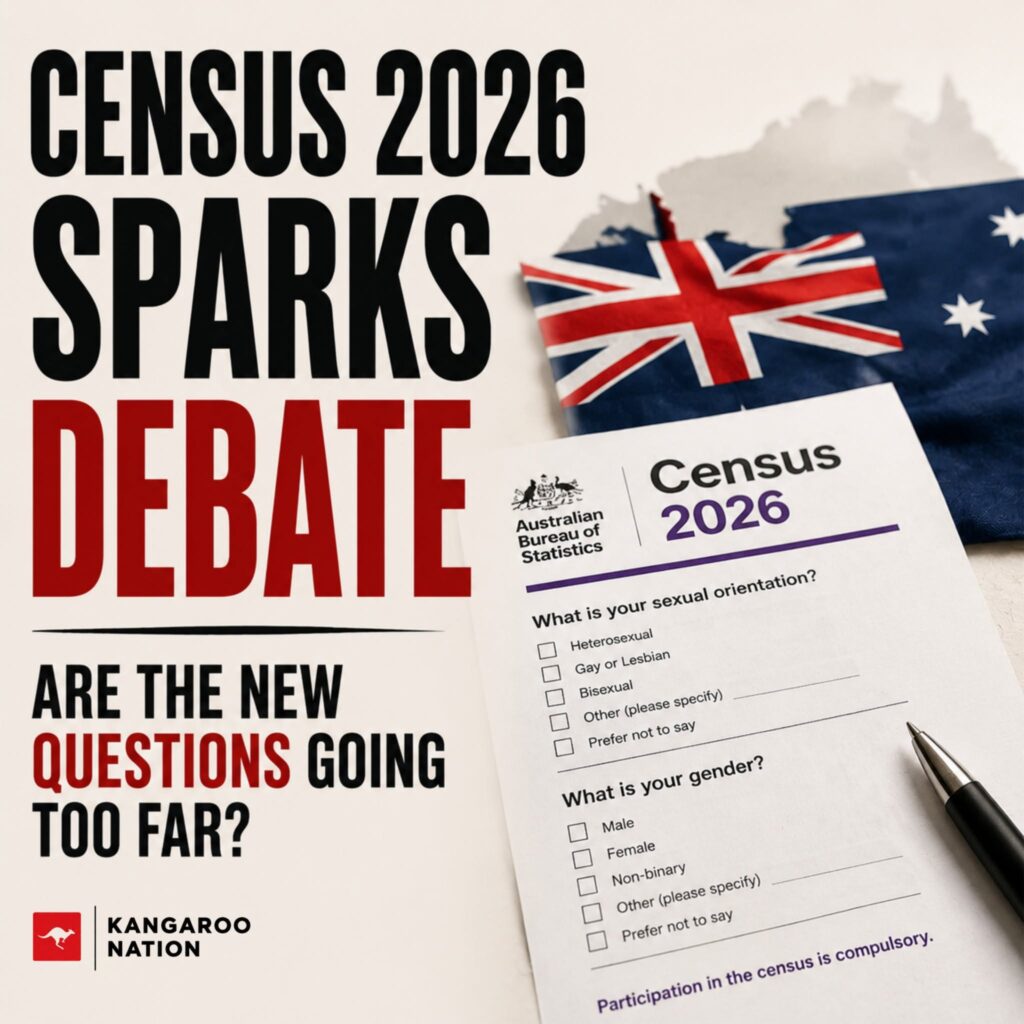
Australia’s 2026 Census will ask people aged 16 and over new questions about gender and sexual orientation, a change the Australian Bureau of Statistics says will improve data about the country’s LGBTQ+ population.
The questions have triggered political and community debate about privacy, inclusion and what information belongs in the national count. The ABS has also issued a clarification after examples circulating online misrepresented parts of the form.
What is changing
The 2026 Census includes a revised question about sex recorded at birth. For people aged 16 and over, it also introduces separate questions about gender and sexual orientation.
The ABS says the combination is designed to produce more accurate statistics and support planning for health, social and community services. The agency says the questions were developed after consultation and testing.
People completing a household form should read the official wording and instructions rather than rely on screenshots or paraphrased versions shared on social media.
Why supporters welcome the questions
Advocacy groups have long argued that limited national data makes it harder to understand the size, age profile and needs of LGBTQ+ communities. Better information can help governments and service providers plan mental-health care, aged care, housing support and other programs.
Supporters also say a modern Census should reflect the language Australians use to describe their lives while still allowing statistics to be compared over time.
Why critics are concerned
Opponents question whether the Census should ask about intimate personal matters and whether all respondents will understand the distinction between sex recorded at birth and gender. Some also worry about privacy or the way the results may be used in future policy debates.
The ABS says Census data is protected by law and released as statistics rather than as identifiable household records. It says strong privacy and security controls apply to collection and processing.
Is participation compulsory?
Completing the Census is required under Australian law, and households can face formal directions and penalties for failing to provide required information. That does not mean every circulating example accurately describes what each person must answer. The official form and ABS guidance are the authoritative sources.
The Census is scheduled for August 2026 and is intended to provide a detailed snapshot of Australia’s population and housing. Results influence research, infrastructure planning and the distribution of public resources.
Watch: questions explained
The debate is likely to continue, but the practical advice is straightforward: check the official ABS material, answer the form according to its instructions and be cautious about viral images that may omit context.
Sources: Australian Bureau of Statistics · ABC News · 7NEWS Australia video



Leave a Reply