
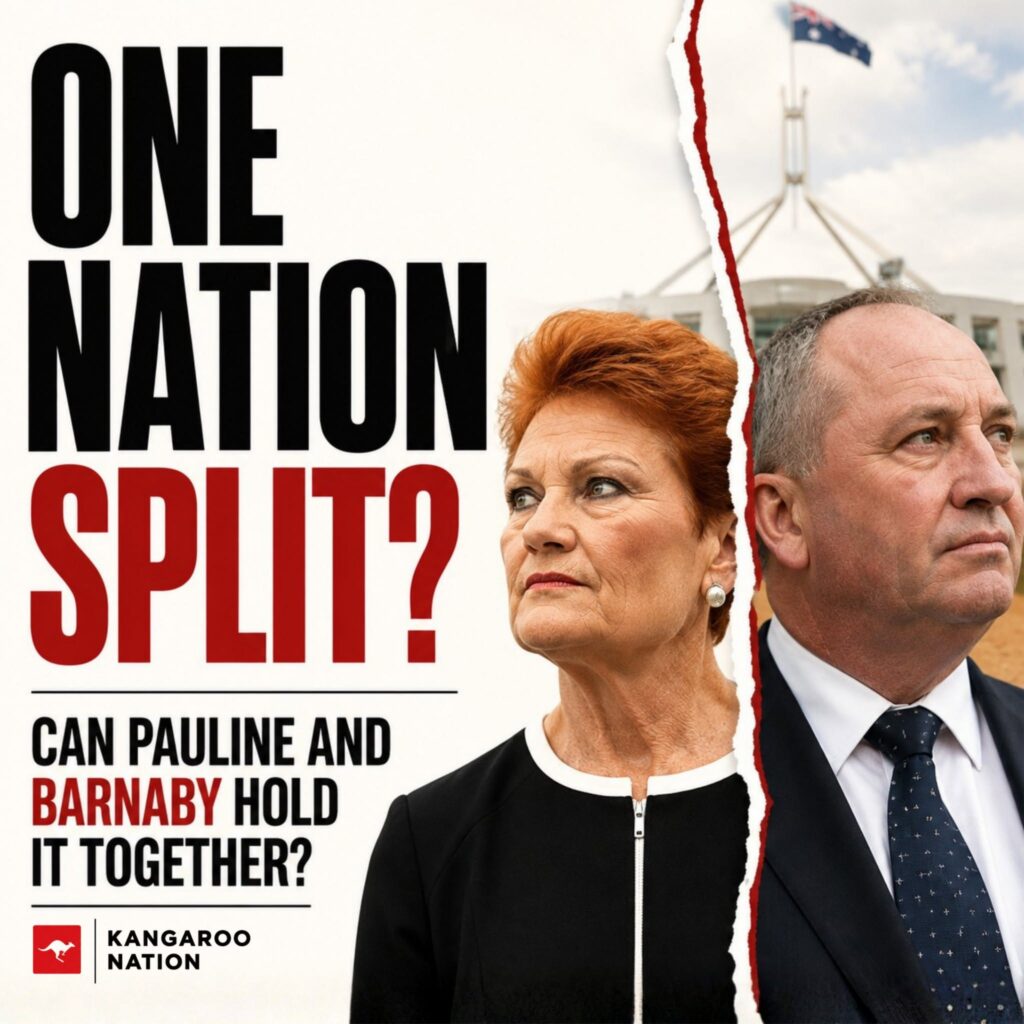
Public differences between Pauline Hanson and Barnaby Joyce have renewed questions about how One Nation will manage competing personalities and policy positions as the party tries to expand its national influence.
Social-media discussion has described the situation as a possible “split”, but no formal leadership challenge or confirmed break has been announced. Hanson has denied reports of a rift, while Joyce has continued to publicly support the party and defend its leader on several issues.
Where the tension claims came from
Reports of internal strain intensified during Hanson’s European trip and after her appearance with British activist Tommy Robinson. Joyce defended Hanson’s right to meet and speak with controversial figures, but he did not endorse every position associated with the appearance.
He also publicly disagreed with Hanson’s broad claim linking Islam with terrorism. That difference gave critics evidence of an ideological gap, while supporters argued it showed party members can hold individual views without the organisation falling apart.
Two different political styles
Hanson founded One Nation and has remained its central public figure for decades. Her leadership is closely tied to the party’s identity, candidate selection and campaigning.
Joyce arrived with a different base and political history. A former deputy prime minister and Nationals leader, he brings experience in regional campaigning, agriculture and parliamentary negotiation. His profile can broaden One Nation’s reach, but it also creates an unusual arrangement in which two nationally recognised politicians must share attention.
Policy agreement—and visible limits
The pair overlap on several themes, including criticism of major-party politics, stronger border controls, regional development and energy security. Joyce has repeatedly argued that voters outside metropolitan centres are not being heard.
However, agreement on broad themes does not remove differences over language, strategy and individual policy details. The test for One Nation is whether those disagreements can be managed through normal internal debate or become a continuing distraction.
No confirmed split
It is important to distinguish evidence from speculation. Hanson has denied a rift, Joyce remains part of the One Nation team, and neither has announced an intention to leave or challenge the other.
Anonymous claims about party tensions deserve scrutiny, especially when they involve political rivals and unnamed sources. Public statements and voting behaviour provide stronger evidence than rumours alone.
What happens next
Unity will be judged through candidate announcements, parliamentary votes and the party’s next policy campaign. If Hanson and Joyce continue to present shared positions while acknowledging limited disagreements, the speculation may fade. Repeated public contradictions or competing leadership messages would keep it alive.
For voters, the central issue is not whether two politicians agree on every subject. It is whether One Nation can produce clear, costed and consistent policies—and whether its leaders can explain who has final authority when disagreement occurs.
Watch: Joyce discusses joining One Nation
Sources: The Guardian Australia · ABC News · Pauline Hanson’s One Nation · The Sydney Morning Herald and The Age video



Leave a Reply