
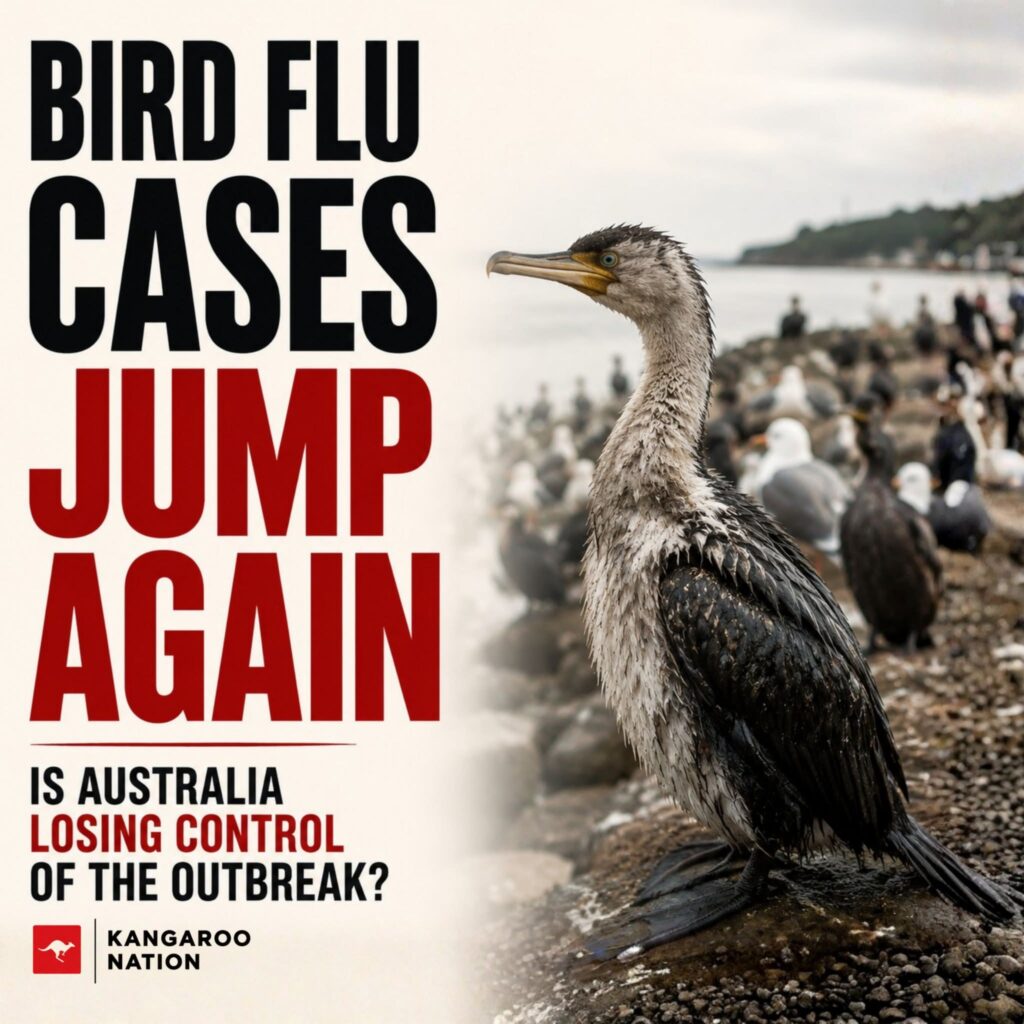
Australia is intensifying surveillance for highly pathogenic H5 avian influenza after new detections in wild birds, with authorities urging the public to report sick or dead wildlife while stressing that the current risk to people remains low.
A fast-moving tally shared in media and social posts has placed confirmed and presumed-positive detections at 52, up from 33 in less than a day. That figure should be treated as a developing report rather than a settled national total: laboratory confirmation takes time, jurisdictions update at different intervals, and an individual detection is not the same as a commercial-farm outbreak.
What authorities have confirmed
The federal Department of Agriculture, Fisheries and Forestry says H5 highly pathogenic avian influenza has been confirmed in Australian wild birds. Recent official updates include detections in migratory and local seabirds, with testing undertaken by state laboratories and the CSIRO Australian Centre for Disease Preparedness.
The Australian Centre for Disease Control says the risk to the general public remains low. Australia has recorded no human cases linked to the current wildlife detections, and official updates have distinguished wild-bird findings from outbreaks in commercial poultry.
Why numbers can change quickly
Surveillance programs collect reports from wildlife officers, veterinarians, researchers and members of the public. Some birds may be recorded as suspected or presumed positive before confirmatory testing is complete. Multiple birds can also be associated with one location or event.
For that reason, readers should check the latest government dashboard or update before repeating a precise national number. A sudden rise can reflect expanded testing and reporting as well as genuine spread.
Why H5 matters
Highly pathogenic H5 strains have caused major wildlife and poultry losses overseas. Wild birds can carry the virus over long distances, while infected mammals have also been recorded internationally. Australia’s island geography and biosecurity system delayed the arrival of the globally circulating strain, but authorities had long warned that migratory birds could eventually introduce it.
The main immediate concern is animal health. An outbreak in a commercial poultry operation could require movement controls, tracing and destruction of infected flocks. Large wildlife events could also threaten vulnerable seabird colonies and other native species.
What the public should do
People should not touch sick or dead wild birds. Record the location from a safe distance and report unusual illness or deaths to the Emergency Animal Disease Hotline on 1800 675 888. Keep pets away from affected wildlife and follow directions from local authorities.
Poultry owners should strengthen hygiene, prevent contact between domestic birds and wild birds where possible, and promptly report unusual sickness or deaths. Properly cooked poultry and eggs remain safe to eat.
Watch: Australia prepares for H5
Sources: Australian Department of Agriculture, Fisheries and Forestry · Australian Centre for Disease Control · ABC News video



Leave a Reply