
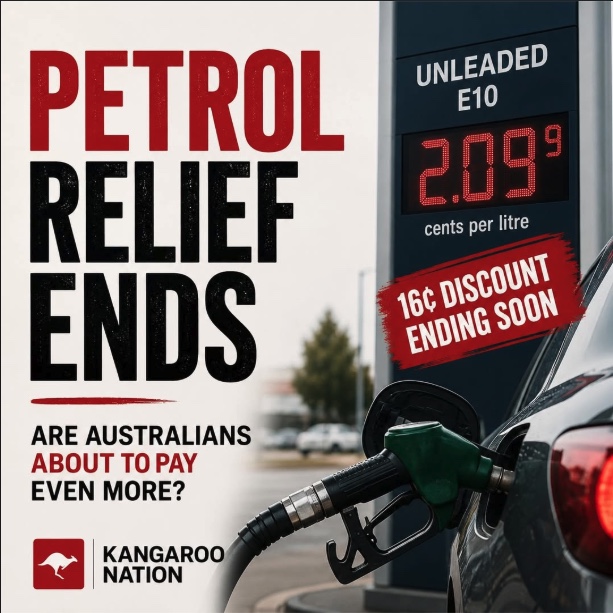
Australian motorists are approaching another change at the bowser as the federal government’s temporary fuel-excise relief reaches its scheduled end.
The Australian Government extended a 16-cent-per-litre reduction on petrol and diesel from 1 July until 2 August 2026. That followed the larger 32-cent discount that operated from April to June. Unless the measure is extended again, the remaining discount will disappear and the full excise rate will again apply to fuel entering the wholesale market.
WHAT CHANGES AT THE PUMP
The end of the discount does not guarantee that every service station will lift its price by exactly 16 cents on the same day. Retail fuel prices also reflect wholesale costs, oil prices, the Australian dollar, local competition and each station’s pricing cycle. Existing stock may have been purchased under the lower rate, while fresh deliveries will carry the higher tax.
Even so, the tax change creates a clear upward pressure. The ACCC has been monitoring prices and market behaviour during the staged restoration of excise. It has also warned retailers that consumers should receive the benefit of tax reductions and that businesses must not make misleading claims about price movements.
WHAT IT MEANS FOR HOUSEHOLDS
For a 50-litre fill, 16 cents a litre is about $8 before any flow-on effect from GST. For people driving long distances to work, families with two cars and regional communities with fewer competing service stations, the annual cost can be much larger.
The timing matters because transport is only one part of the household budget. Rent, mortgages, food, insurance and electricity have already absorbed a growing share of income for many Australians. Higher fuel costs can also move through freight and delivery expenses, adding pressure to businesses and, eventually, some retail prices.
COULD PETROL REACH $2 A LITRE?
Some stations are already displaying prices around or above $2, but Australia does not have one national petrol price. The effect will differ by city, region and fuel cycle. A high displayed price may reflect the stage of a local cycle as much as the tax change.
Drivers can reduce the impact by comparing prices before filling up, avoiding the peak of a pricing cycle where possible and checking official or state-based fuel-price services. The ACCC publishes monitoring information, while several states require real-time price reporting.
THE POLITICAL TEST
The relief was introduced as a temporary response to an international fuel shock. Ending it improves government revenue, but it also creates a highly visible cost-of-living test: motorists see the price every time they pass a service-station sign.
The key question is not whether the excise rises—the timetable is public—but how quickly the increase reaches consumers and whether global oil markets add another layer of pressure. Kangaroo Nation will continue to track retail prices and any government decision on the scheduled 2 August expiry.
Sources: Australian Government · ACCC · Department of Infrastructure



Leave a Reply