
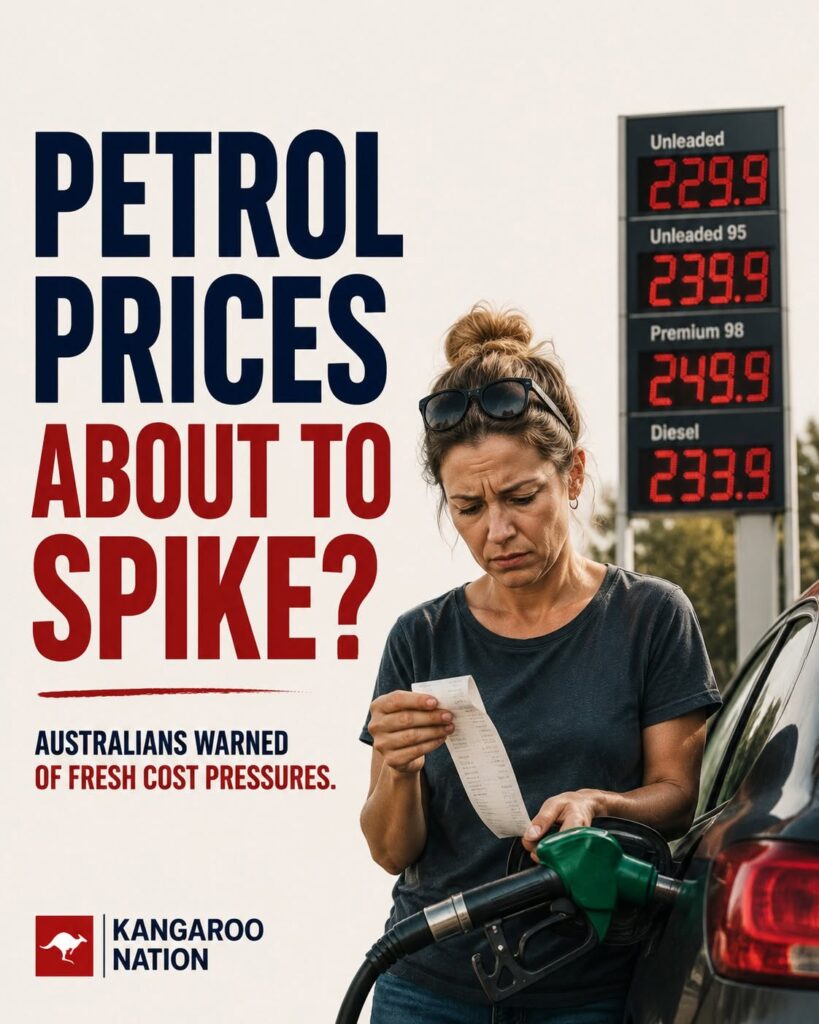
Australian motorists are being warned that renewed volatility in global oil markets could place upward pressure on petrol prices.
Australia imports much of its refined fuel, so local prices are influenced by international crude and refined-product benchmarks, the Australian dollar and the timing of each retailer’s price cycle. A sharp overseas movement does not always appear at every bowser immediately, but sustained increases can filter through to wholesale and retail prices.
The Australian Competition and Consumer Commission says it is monitoring fuel prices during the current Middle East conflict. It also advises motorists to compare prices because differences between service stations can be significant, particularly through capital-city price cycles.
For households already managing higher grocery, housing and electricity costs, even a modest increase in fuel can have a wider effect. Transport costs are difficult to avoid for many regional residents and workers without reliable public transport, while businesses may also pass some higher freight costs through to consumers.
What motorists can do
Price-comparison apps, filling up at the lower point of a local cycle and avoiding the most expensive locations can reduce the impact. The bigger uncertainty is how long global supply concerns last and whether the Australian dollar cushions or amplifies the movement.
Sources: ACCC fuel monitoring · ABC News · Original Facebook post