

Reporting note: The leadership changes described in the supplied artwork have been reported in Australian media. At publication time, Kangaroo Nation could independently confirm James Ashby’s established role as Pauline Hanson’s chief of staff and senior strategist, but had not located a detailed public announcement from One Nation setting out every new title and responsibility. The article distinguishes confirmed background from reported appointments.
Pauline Hanson’s One Nation is reportedly restructuring its senior operation as it attempts to convert record polling attention into a larger and more durable political organisation.
Under the reported changes, longtime Hanson adviser James Ashby would move into a broader party-management role, while Chris Taylor — described in reports as a former Scott Morrison aide and policy adviser — would become Hanson’s chief of staff. The move would separate campaign and organisational work from the daily management of the federal leader’s office.
That may sound like an internal staffing decision, but it carries wider political significance. One Nation is no longer being judged only as a protest party. Its recent polling, fundraising activity and expansion into new electorates mean it increasingly faces the same test as larger parties: can it recruit credible candidates, manage internal disputes, develop costed policies and run a disciplined national campaign?
Why James Ashby matters
Ashby has been one of the most influential figures in One Nation for years. ABC reporting and the party’s own public material identify him as Hanson’s chief of staff, while other reports have described him as a chief strategist and senior Queensland figure.
He has played a central role in campaign planning, candidate management, media strategy and fundraising. In June, Ashby said One Nation would use an independent auditor to verify a major fundraising effort after questions were raised about the campaign. He has also spoken publicly about the party’s future and its plan to target seats held by both Labor and the Coalition.
Moving Ashby into a party-boss or national organisational role would formalise work he has already been associated with. It would allow him to concentrate on membership growth, election strategy, campaign infrastructure and the selection of competitive candidates across the country.
It would also increase scrutiny. Former One Nation candidates have publicly criticised aspects of the party’s internal decision-making, including how concerns were handled and how candidates were supported. One Nation disputes many criticisms directed at its leadership, but expansion makes transparency, governance and accountability more important, not less.
What a new chief of staff would do
A parliamentary chief of staff manages the leader’s office, coordinates advisers, prepares briefings, helps shape policy priorities and manages the flow between media, parliament and the wider party. The role requires political judgement as well as administration.
If Chris Taylor’s reported appointment is confirmed, his experience around a former Coalition government could help One Nation build a more conventional policy and parliamentary operation. A staffer familiar with government processes can help turn broad political promises into legislation, budget submissions, parliamentary tactics and detailed campaign documents.
That does not guarantee success. One Nation’s appeal has partly come from presenting itself as an alternative to the political establishment. Bringing in experienced conservative operatives may make the party more capable, but it could also create tension between its anti-establishment brand and a more professionalised internal machine.
From protest movement to national contender
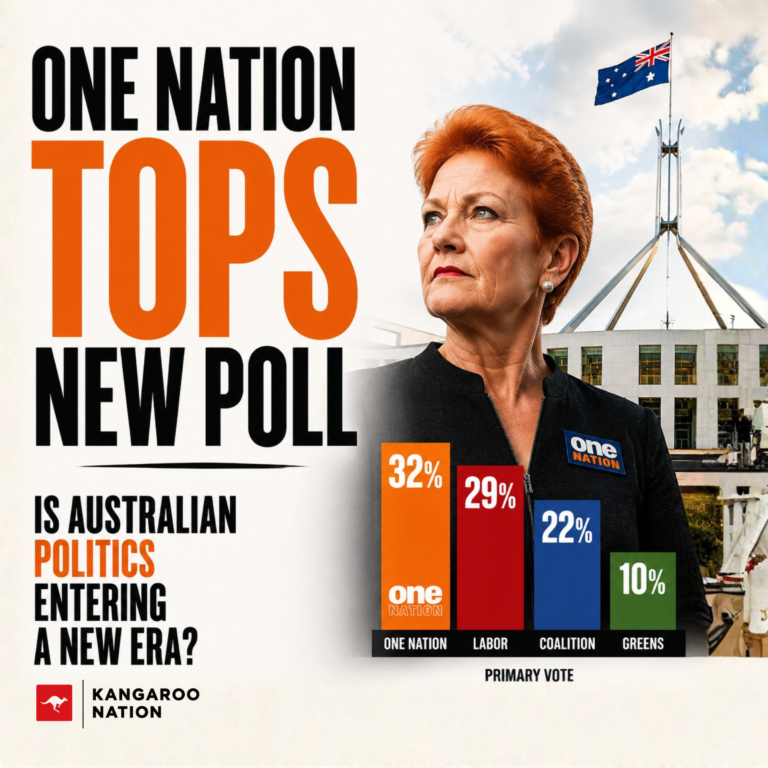
One Nation won about 6.4% of the lower-house vote at the 2025 federal election. Since then, several polls have placed its support far higher, sometimes ahead of the Coalition and occasionally level with or above Labor on primary voting intention.
Polls are not election results. Australia’s preferential voting system, local candidates and the geographic concentration of support determine how votes become seats. Even so, sustained national support changes the resources required. A party polling in the twenties cannot rely on a small central team and improvised campaigns.
It needs candidate checks, compliance systems, fundraising controls, local branches, rapid media responses and policies that survive detailed examination. It must also decide where to concentrate money and personnel rather than spreading them too thinly across 150 House of Representatives contests.
The challenge of candidate quality
Rapid growth can create opportunity and risk. One Nation needs enough candidates to contest target seats, but rushed recruitment can expose a party to damaging revelations, inconsistent policy positions or candidates who are not prepared for public scrutiny.
Centralised control can enforce discipline, yet excessive control can frustrate local members and candidates. A durable national party must find a balance between a clear message from headquarters and genuine local representation.
The party’s opponents will examine candidates’ employment histories, social-media activity, financial arrangements and public statements. One Nation will need a professional vetting process as well as clear rules for dealing with complaints. The standard becomes higher when a party asks voters to treat it as a possible party of government.
Policy is the next test
One Nation has benefited from dissatisfaction over immigration, housing, cost of living, energy policy and trust in institutions. But voter frustration is not a substitute for an implementable program.
Reducing migration, for example, would affect housing demand but also universities, health services, construction, agriculture and other industries that use overseas workers. Energy promises must account for price, reliability, investment and emissions. Tax and spending proposals require credible costings.
A larger policy team could help the party explain those trade-offs. It could also reduce the gap between campaign messaging and what can actually pass through parliament. Voters considering One Nation as more than a protest vote will expect details about health, education, defence, pensions, industrial relations and the federal budget.
What the shake-up means for Labor and the Coalition
The Coalition faces the most immediate organisational threat. Opposition Leader Angus Taylor has ruled out an arrangement to divide electorates with One Nation, meaning the parties may compete directly for conservative and regional voters in many seats.
Labor cannot assume that this is only a fight on the right. Research and polling suggest One Nation also attracts some working-class and outer-suburban voters who previously supported Labor. The government’s strongest answer will be practical delivery on living costs, housing, health and secure work rather than treating every One Nation supporter as ideologically identical.
A more professional One Nation could make preference negotiations and three-cornered contests more complicated. It may also force both major parties to explain their policies more clearly in communities where political trust has weakened.
A bigger operation brings bigger accountability
The reported appointments suggest One Nation is preparing for a longer campaign rather than relying on a temporary surge. Separating party management from Hanson’s parliamentary office could improve planning and allow clearer responsibility for strategy, policy and day-to-day operations.
But professionalisation is not the same as democratic maturity. A party seeking greater power must show how decisions are made, how candidates are selected, how money is managed and how internal complaints are handled. It must also tolerate scrutiny without treating every question as an attack.
For Hanson, the opportunity is substantial. Her party has political momentum, an identifiable brand and growing attention. The risk is that rapid expansion magnifies weaknesses that were easier to manage when the organisation was smaller.
The leadership shake-up will be judged by results: credible candidates, detailed policies, transparent administration and the ability to turn national support into local victories. One Nation may be entering a new phase, but the next step is not simply getting bigger. It is proving that the party can carry the responsibilities that come with its ambitions.
Sources
- ABC News — One Nation fundraising and election strategy
- ABC PM — Angus Taylor rules out working with One Nation
- ABC News — Former candidates raise internal concerns
- Pauline Hanson’s One Nation — James Ashby on the party’s future
- The Guardian — One Nation funding, membership and organisation
- Australian Electoral Commission — Preferential voting explained

Leave a Reply