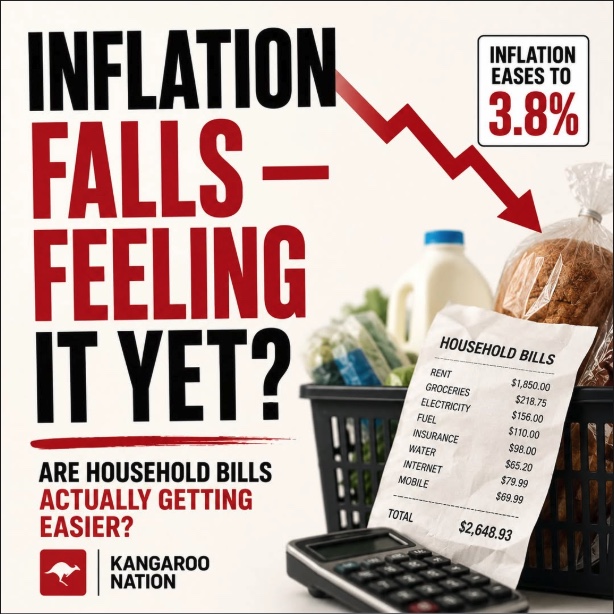
Australia’s inflation rate has eased, but the latest number does not mean household prices are falling.
The Australian Bureau of Statistics reported that the Consumer Price Index rose 3.8 per cent over the year to June 2026, down from 4.0 per cent in May. The result reduces some of the immediate pressure for another interest-rate increase, although inflation remains above the Reserve Bank of Australia’s 2-to-3 per cent target band.
WHAT THE 3.8 PER CENT FIGURE MEANS
Annual inflation of 3.8 per cent means the broad basket of goods and services measured by the ABS costs more than it did a year earlier. A lower rate means prices are rising more slowly; it is not the same as a fall in the price level.
That distinction helps explain why many people do not feel relief. A grocery item, insurance premium or rent that rose sharply last year can remain expensive even when its next increase is smaller. Household experience also varies because the CPI is an average. Renters, mortgage holders, retirees and families with children spend their money differently.
WHERE PRESSURE REMAINS
Housing, food, transport and insurance have been major sources of pressure across recent inflation reports. Rent increases feed through gradually because leases reset at different times. Building costs affect new homes, renovations and insurance. Food prices can be pushed around by weather, supply disruptions and global commodity costs.
Petrol is especially volatile. Changes in world oil prices, the Australian dollar and temporary fuel-excise relief can shift the headline CPI quickly. That volatility is one reason policymakers also examine underlying measures that remove or reduce the influence of unusually large price changes.
WHAT IT COULD MEAN FOR INTEREST RATES
The Reserve Bank does not set rates from one headline number. It studies underlying inflation, wages, employment, consumer demand, business conditions and forecasts for how long price pressure will persist.
A decline from 4.0 to 3.8 per cent is welcome evidence that inflation is moving in the right direction. However, a rate above the target band means the RBA will want more proof that the improvement is durable. A pause is not the same as a promise that rates will soon fall, and an unexpected rise in underlying inflation could keep further tightening on the table.
For mortgage holders, the effect depends on the cash-rate path and how quickly lenders change variable rates. Renters may feel an indirect effect because higher financing and construction costs can influence housing supply and landlord expenses, although rents are ultimately shaped by local demand and available homes.
WHY THE PUBLIC MOOD CAN DIFFER FROM THE DATA
Official inflation measures the rate of change; households live with the accumulated price level. If bills rose quickly for several years, one softer month will not restore the purchasing power that was lost.
Wages also matter. A household is better placed when its income grows faster than its personal cost of living. The opposite is true when rent, insurance and essentials outpace pay. That is why the real test is not only whether CPI declines, but whether disposable income improves after housing, tax and debt repayments.
WHAT TO WATCH NEXT
The next inflation release will show whether June was the beginning of a sustained slowdown or another uneven step. Watch the underlying measures, services inflation and housing costs rather than only the headline percentage.
For now, the result offers cautious relief to policymakers but a more complicated message for households: the pace of price rises has eased, yet the cost-of-living squeeze has not automatically disappeared.
Sources: Australian Bureau of Statistics · Reserve Bank of Australia



Leave a Reply